

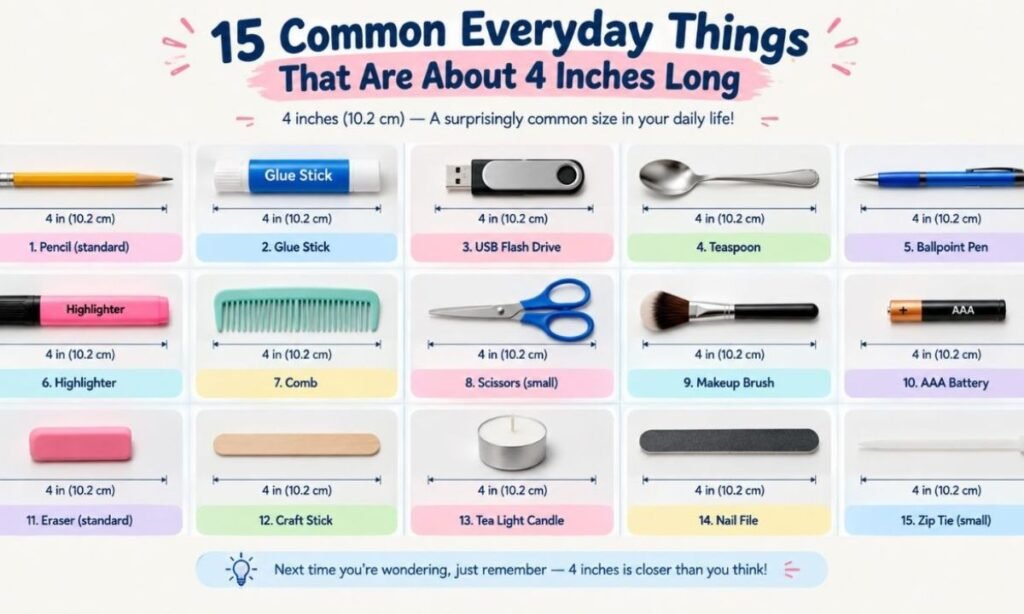
Ever tried to picture exactly how long 4 inches is without grabbing a ruler? You’re not alone. Most people have a rough sense of an inch, but stacking four of them together in your mind’s eye is trickier than it sounds. That’s where everyday comparisons come in handy.
Four inches is a small but surprisingly common length. It shows up in the width of your phone, the size of a bar of soap, and even the span of four fingers held together. Once you connect a measurement to something you already touch or see daily, it becomes much easier to estimate distances and sizes without any tools at all.
This guide breaks down exactly what 4 inches means in every common unit, walks through 15 real objects that are about that size, and offers practical tips for visualizing the measurement on the fly. You’ll also find comparison tables, common estimation mistakes, and answers to the questions people ask most often about this length.
Quick Conversion / Measurement Reference
Four inches is a standard length in the imperial system, and it converts cleanly into the metric units most of the world uses.
| Unit | Value |
| Inches | 4 in |
| Centimeters | 10.16 cm |
| Millimeters | 101.6 mm |
| Meters | 0.1016 m |
| Feet | 0.333 ft (1/3 foot) |
In simple terms, 4 inches is a little longer than 10 centimeters, and just about a third of a foot. It’s short enough to fit in your palm but long enough to notice at a glance.
Quick Reference Table
Here’s how 4 inches stacks up against a handful of familiar objects.
| Item | Approximate Length/Size | How Close to 4 Inches |
| Smartphone width | 2.8–3 in | Close |
| Standard soap bar | 3.5–4 in | Very close |
| Toothbrush (half length) | 3.5–4 in | Very close |
| Compact mirror | 3–4 in | Close |
| Kitchen spoon | 4–5 in | Close |
| Tape roll diameter | 4 in | Exact |
| Power bank length | 4–4.5 in | Close |
| Four fingers width | 3.5–4 in | Very close |
What Is 4 Inches? (Quick Overview)
Four inches is a unit of length in the imperial measurement system, equal to just over 10 centimeters. It sits comfortably between “small” and “medium” on the everyday size scale big enough to hold between two fingers, but small enough to fit in a coat pocket. Because it’s roughly a third of a foot, 4 inches often appears in product dimensions, packaging, and tools where compact size matters.
4 Inches in Different Units (cm, mm, feet)
Understanding how 4 inches translates across measurement systems makes it easier to compare products or follow instructions written in another unit.
- 4 inches = 10.16 centimeters
- 4 inches = 101.6 millimeters
- 4 inches = 0.1016 meters
- 4 inches = 0.333 feet
These conversions matter most when reading international product listings, cooking instructions, or DIY project specs, since many countries default to metric measurements instead of inches.
What Does 4 Inches Look Like?
Picture four fingers pressed together, side by side, from the edge of your pinky to the edge of your index finger. That’s roughly 4 inches for most adults. It’s also close to the width of a standard smartphone, or about two-thirds the length of a dollar bill turned sideways. If you’ve ever held a bar of soap or a compact mirror, you’ve already held something close to 4 inches in your hand.
Why Understanding 4 Inches Matters
Being able to estimate 4 inches accurately is useful well beyond the classroom. It helps with everyday tasks like judging whether an item will fit in a drawer, following a recipe that calls for a specific pan size, or checking if a package will fit through a mail slot. For DIY projects, crafting, and home organization, a solid mental sense of small measurements like 4 inches saves time and prevents costly mistakes.
15 Real-Life Examples of 4 Inches (Common Everyday Objects)
1. Four Fingers Width
Holding your four fingers together, side by side, typically measures close to 4 inches for an average adult hand. It’s one of the simplest built-in rulers you carry everywhere.
2. Standard Smartphone Width
Most modern smartphones measure between 2.8 and 3 inches wide, but many phone cases and larger phablet models push closer to the 4-inch mark, making this a handy visual reference.
3. Small Bread Slice Length
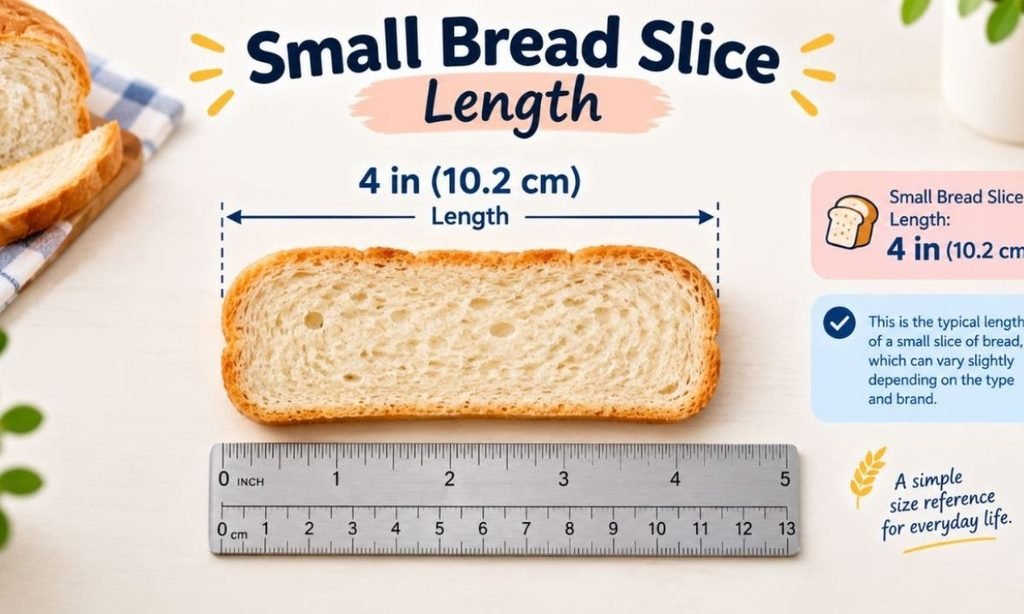
A small slice of sandwich bread often measures close to 4 inches on its longest side, especially from artisan or mini loaves.
4. TV Remote (Top Section)
The upper portion of a standard TV remote, from the top edge down to around the volume buttons, frequently measures close to 4 inches.
5. Toothbrush (Half Length)
A standard adult toothbrush is roughly 7 to 8 inches long, meaning the handle alone — about half the toothbrush lands right around 4 inches.
6. Mini Notebook Height
Small pocket notebooks, often used for quick notes or sketches, commonly measure about 4 inches in height, making them easy to slip into a bag or pocke
7. Small Kitchen Spoon
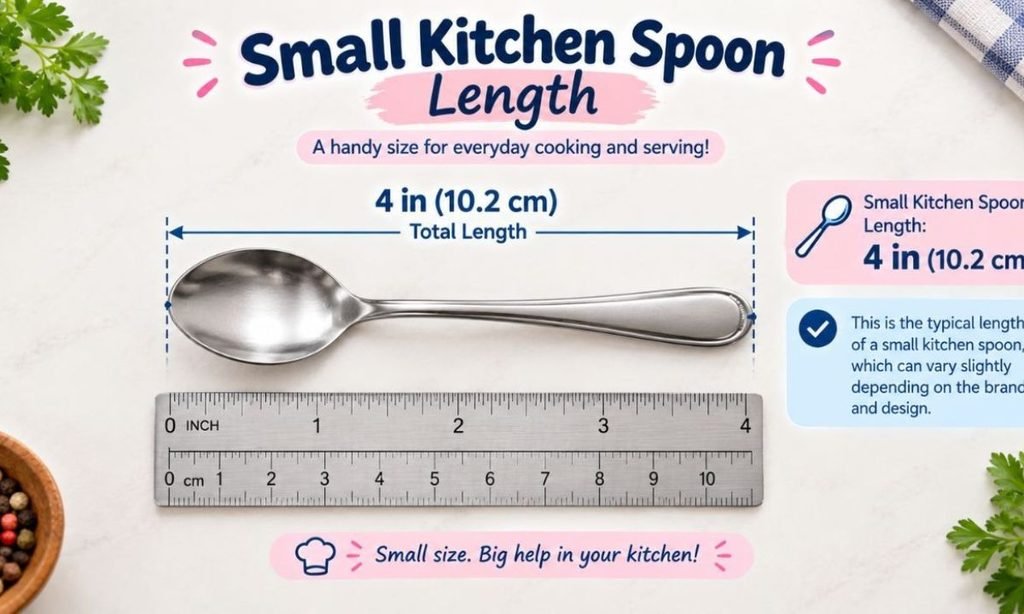
A compact kitchen spoon, such as a teaspoon or small serving spoon, typically measures around 4 to 5 inches from tip to handle end.
8. Compact Wallet Width
Slim or bifold wallets are frequently designed to be about 4 inches wide, keeping them close to pocket-friendly dimensions.
9. Soap Bar (Regular Size)
A standard bar of bath soap is usually about 3.5 to 4 inches long, making it one of the most reliable everyday comparisons for this measurement.
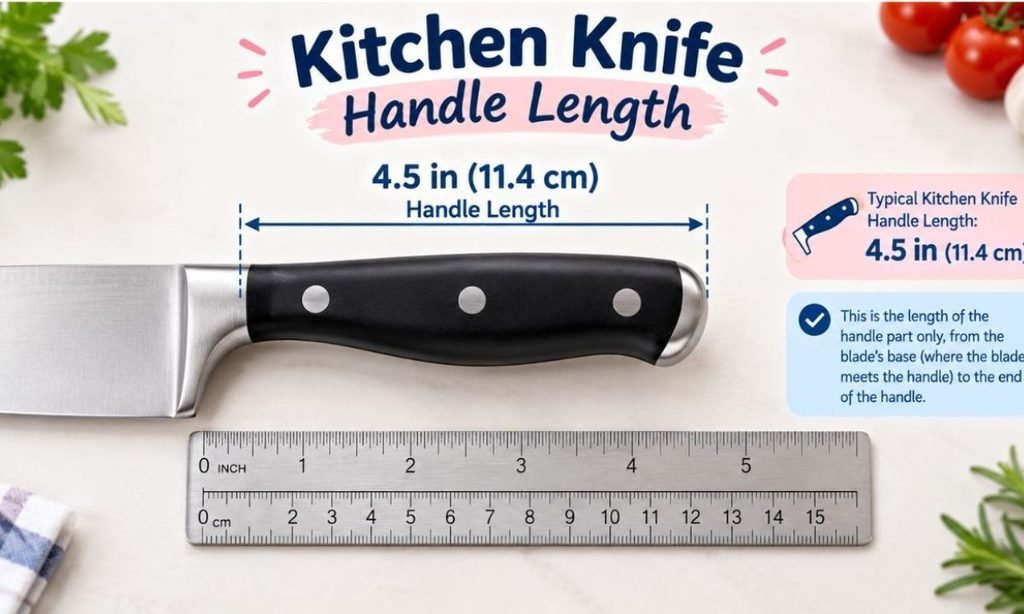
10. Kitchen Knife Handle
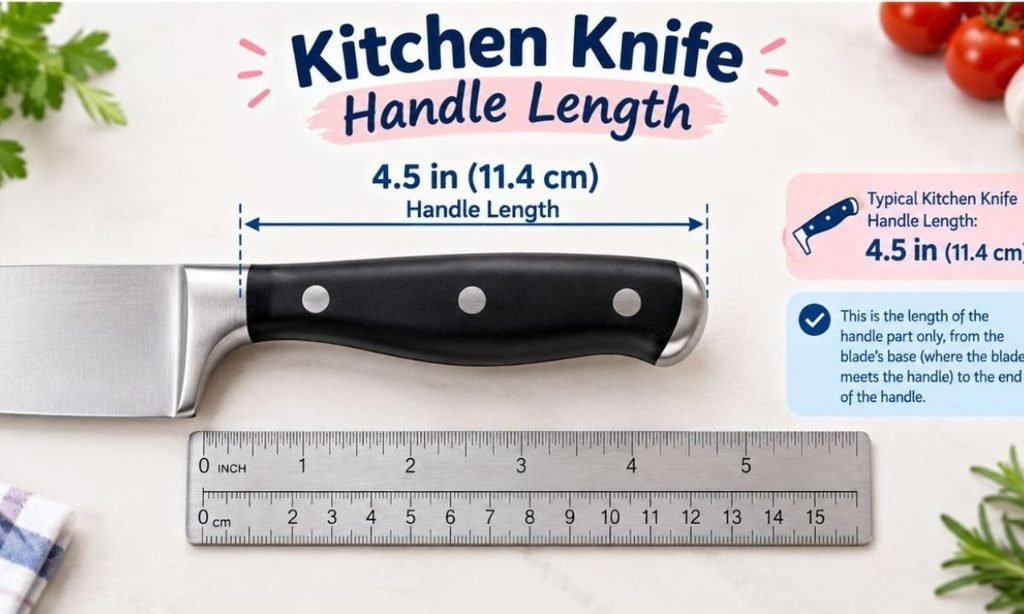
The handle portion of many kitchen knives, separate from the blade, measures approximately 4 inches, giving a comfortable, secure grip.
11. Small Food Container Width
Compact food storage containers, especially ones meant for snacks or small portions, are often built with a 4-inch width for easy stacking.
12. Power Bank Length
Many compact power banks, the kind designed to slip into a bag or pocket, measure close to 4 to 4.5 inches in length.
13. Compact Mirror
Small handheld or compact mirrors are frequently designed with a diameter or width close to 4 inches, balancing visibility with portability.
14. Tape Roll Diameter
A standard roll of packing or duct tape often measures right around 4 inches in diameter, making this one of the more precise comparisons on this list.
15. Small Sandwich Width
A small, halved sandwich often measures close to 4 inches across, especially when cut from a standard sandwich loaf.
4 Inches in Daily Life
Four inches appears more often than most people realize in the dimensions of household items, packaging, tools, and even body measurements like finger width. Because it’s a manageable, portable size, many products are intentionally designed close to this length for convenience, whether that’s a wallet meant to fit in a pocket or a spoon sized for easy handling.
How to Visualize 4 Inches Without a Ruler
You don’t need a measuring tape to get a reasonably accurate estimate of 4 inches. A few reliable body-based and object-based references can help.
Practical Comparison Table
| Reference Object | Approximate Size | How It Helps |
| Four fingers together | ~4 in | Always available, quick estimate |
| Bar of soap | 3.5–4 in | Common household item |
| Smartphone width | ~3 in | Close reference, slightly under |
| Compact mirror | 3–4 in | Portable visual comparison |
These comparisons are approximate rather than exact, since hand size, product design, and manufacturing vary. For precise work, a ruler or tape measure is still the most reliable tool.
Common Mistakes When Estimating 4 Inches
People often underestimate 4 inches by picturing it as smaller than a standard smartphone width, when in fact it’s slightly longer. Another common mistake is assuming all “small” spoons, wallets, or notebooks are automatically close to 4 inches sizes vary by brand and design, so treating any single item as an exact standard can lead to inaccurate guesses.
4 Inches Compared to Other Common Measurements
Seeing 4 inches next to smaller and larger measurements helps put its size in context.
| Measurement | Approximate Value | Difference |
| 2 inches | 5.08 cm | 2 inches shorter |
| 4 inches | 10.16 cm | Reference point |
| 6 inches | 15.24 cm | 2 inches longer |
This comparison shows that 4 inches sits comfortably in the middle range of small household measurements noticeably longer than 2 inches, but still well short of a standard 6-inch ruler segment.
How 4 Inches Is Used in Product Design
Product designers frequently use 4 inches as a benchmark for items meant to be compact yet functional. Wallets, spoons, remote controls, and travel-sized toiletries are often built close to this length because it balances portability with usability. A 4-inch dimension is small enough to fit in a pocket, bag, or drawer, while still being large enough to handle comfortably.
Importance of Accurate Measurement in Everyday Tasks
Accurate measurement matters in tasks ranging from cooking and crafting to packing and home repairs. Misjudging a length like 4 inches even by an inch or two can mean an item doesn’t fit where it’s supposed to, a recipe turns out wrong, or a DIY project needs redoing. Developing a reliable sense of small measurements reduces errors and saves time.
Tips for Improving Your Measurement Skills
- Practice estimating everyday objects, then check them against a ruler to build accuracy.
- Memorize a few reliable body-based references, like finger width or hand span.
- Compare unfamiliar measurements to familiar objects, such as a smartphone or soap bar.
- Use quick reference tables like the ones above to reinforce common size comparisons.
- Double-check estimates with an actual tool whenever precision matters.
FAQs About 4 Inches
What Is 4 Inches in Centimeters?
Four inches equals 10.16 centimeters, making it just over 10 cm when converting between imperial and metric units.
Is 4 Inches Big or Small?
Four inches is considered small to medium in everyday terms noticeably larger than an inch or two, but still compact enough to fit comfortably in a pocket or hand.
How Can I Measure 4 Inches Without a Ruler?
You can estimate 4 inches using four fingers held together, a standard bar of soap, or the width of a smartphone as a rough visual guide.
Is 4 Inches Common in Daily Life?
Yes, 4 inches shows up frequently in everyday objects, from wallet widths to spoon lengths to compact mirrors, making it a familiar and practical measurement.
What Objects Are About 4 Inches Long?
Common examples include a bar of soap, a compact mirror, a toothbrush handle, a small kitchen spoon, and a roll of tape, among others listed above.
Why Do Product Designers Use 4 Inches So Often?
Because it strikes a balance between portability and usability, 4 inches is a popular target size for compact household and personal items.
Conclusion
Four inches equals 10.16 centimeters, 101.6 millimeters, and roughly a third of a foot a small but versatile length that appears throughout daily life. From the width of a soap bar to the handle of a toothbrush, everyday objects offer plenty of natural reference points for picturing this measurement without ever reaching for a ruler.
The easiest way to remember 4 inches is to think of four fingers held together or a standard bar of soap in your hand. With a few reliable comparisons in mind, estimating 4 inches or any small measurement becomes second nature.
