

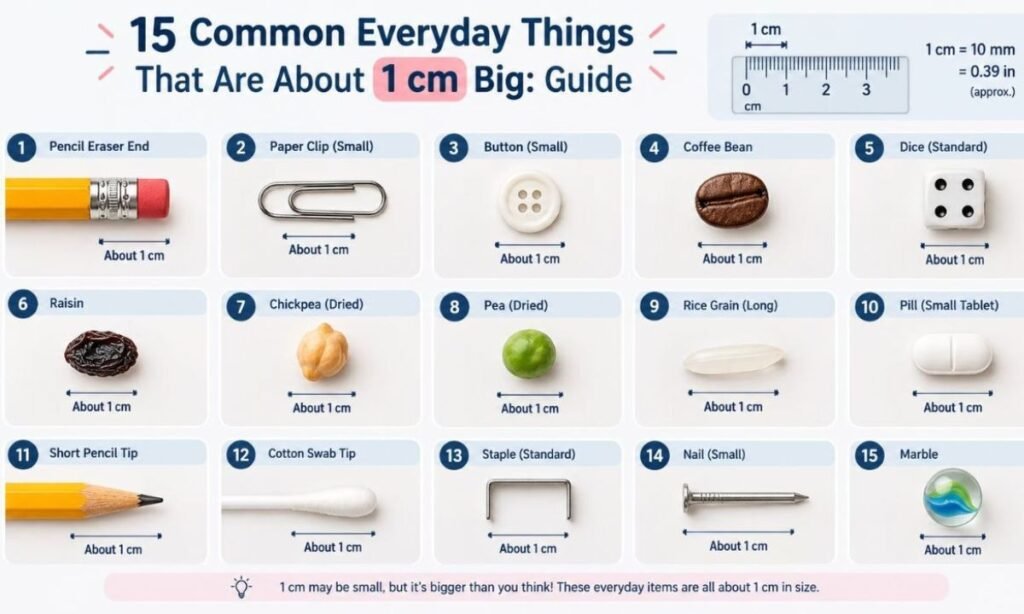
Centimeters show up everywhere, yet most people struggle to picture exactly how big 1 cm really is. If you’ve ever tried to estimate a small measurement without a ruler nearby, you’ve probably wished you had a quick mental reference. This guide on 15 common everyday things that are about 1 cm big solves that problem by connecting this tiny unit to objects you already recognize and use every day.
In simple terms, a centimeter is a small unit of length equal to one-hundredth of a meter. It’s roughly the width of a fingernail or the thickness of a standard pencil small enough to seem abstract on paper, but easy to visualize once you compare it to something familiar. Because 1 cm is used constantly in daily life, from packaging to crafts to DIY projects, having a mental picture of its size is genuinely useful.
This article covers everything you need to know: quick unit conversions, a real-world comparison table, 15 detailed everyday examples, common estimation mistakes, how 1 cm compares to nearby measurements, how it’s applied in product design, and answers to the most frequently asked questions about this measurement.
Quick Conversion / Measurement Reference
Here’s how 1 cm translates into other commonly used units of measurement.
| Unit | Value |
| Centimeters | 1 cm |
| Millimeters | 10 mm |
| Meters | 0.01 m |
| Inches | 0.3937 in (≈ 0.4 in) |
| Feet | 0.0328 ft |
In short, 1 cm is a small but practical unit about a third of an inch, or the width of ten stacked millimeters. It’s large enough to measure everyday objects accurately, yet small enough to require careful estimation when you don’t have a ruler on hand.
Quick Reference Table
Before diving into detailed examples, here’s a snapshot comparing 1 cm to familiar objects.
| Item | Approximate Length/Size | How Close to 1 cm |
| Fingernail width | 1 cm | Very close |
| Standard pencil thickness | 0.7–1 cm | Close |
| Stapler pin (unfolded) | 1 cm | Exact |
| Shirt button diameter | 1–1.5 cm | Close |
| USB port height | 0.7–1 cm | Close |
| Pen cap thickness | 0.8–1 cm | Close |
| Coin thickness (stacked, 5 coins) | ~1 cm | Very close |
| House key thickness | 0.2 cm (bundled: ~1 cm) | Close |
1 cm in Different Units (mm, Inches, Feet Conversion)
Understanding how 1 cm relates to other units makes it far easier to apply in real situations, whether you’re reading a product label in inches or following a recipe or craft pattern using millimeters. As shown above, 1 cm equals 10 mm, 0.01 m, roughly 0.39 inches, and about 0.033 feet.
This conversion matters because different countries and industries use different measurement systems. The United States commonly uses inches, while most of the world uses the metric system. Knowing that 1 cm is just under half an inch helps you switch between the two without needing a calculator every time.
What Does 1 cm Look Like? (Visual Size Guide)
Picture the short edge of a standard paperclip, or the width of your pinky fingernail that’s approximately 1 cm. It’s a small, narrow length: not long enough to span your palm, but noticeably wider than the tip of a sharpened pencil lead.
Another helpful way to imagine 1 cm is to think of ten evenly spaced lines within a single centimeter, each representing 1 mm. If you’ve ever looked closely at a ruler, the space between the “0” and “1” marking is exactly 1 cm small, precise, and easy to underestimate visually until you compare it to something tangible.
Why Understanding 1 cm Matters in Everyday Life
Accurately visualizing 1 cm isn’t just a classroom exercise it has real, practical value. From adjusting a hem, drilling a hole in the correct spot, or checking whether a product will fit in a designated space, small measurement errors can lead to big mistakes.
People frequently rely on 1 cm estimates when:
- Shopping for furniture or clothing online without a tape measure
- Following craft, sewing, or woodworking instructions
- Comparing product dimensions listed in centimeters
- Making quick adjustments during cooking, baking, or gardening
Because 1 cm is such a commonly referenced unit, being able to estimate it accurately saves time and prevents costly errors.
15 Real-Life Examples of 1 cm (Common Everyday Objects)
Below are 15 objects you likely already own or interact with regularly, each offering a reliable, memorable reference point for visualizing 1 cm.
1. Fingernail Width
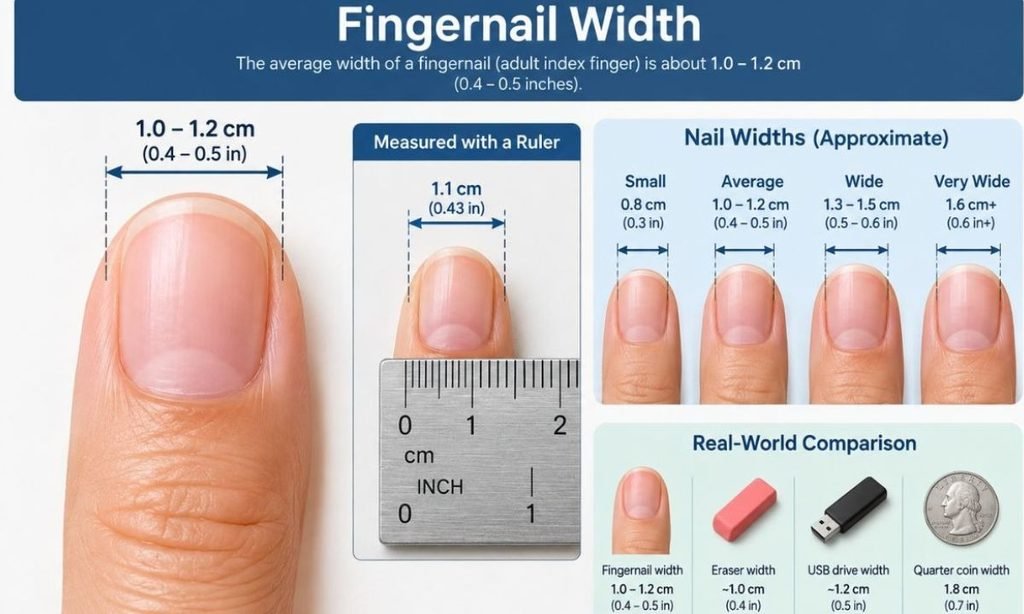
The width of an average adult fingernail particularly on the index or middle finger is very close to 1 cm. This makes it one of the most convenient references, since your hand is always with you.
2. Standard Pencil Thickness
A typical wooden pencil measures approximately 0.7–1 cm in diameter. Holding one between your fingers gives an immediate physical sense of how slim 1 cm truly is.
3. Stapler Pin Length
An unfolded standard staple measures almost exactly 1 cm from end to end. This makes it one of the most precise everyday comparisons available.
4. Small Eraser Thickness
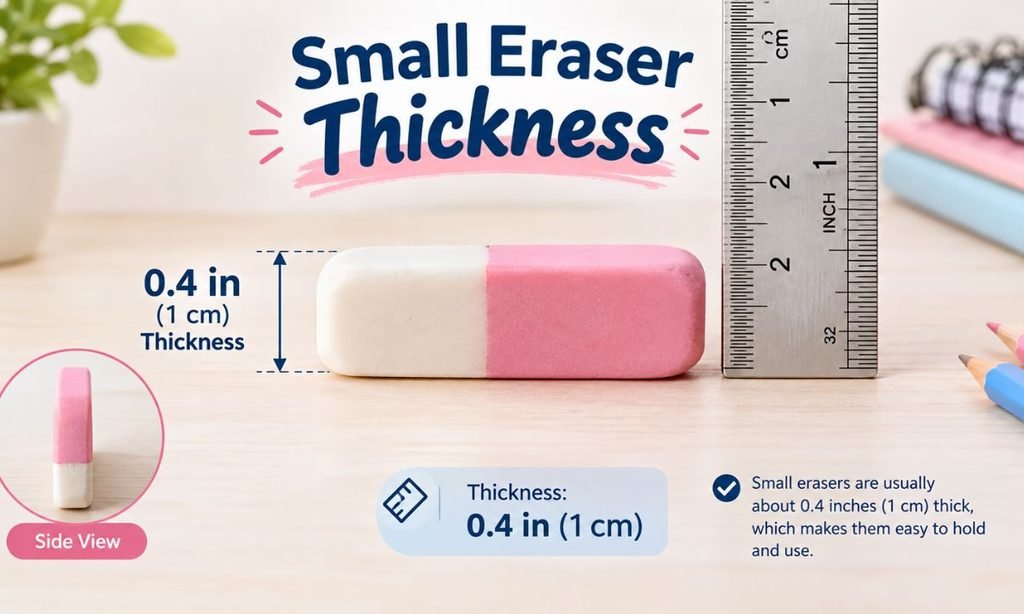
The thickness of a small rectangular eraser, particularly the pencil-top variety, hovers right around 1 cm, offering a compact and tactile reference.
5. Shirt Button Diameter
Standard shirt buttons typically range from 1 to 1.5 cm in diameter, with smaller buttons landing almost exactly at the 1 cm mark.
6. USB Port Height
The vertical opening of a standard USB-A port measures approximately 0.7–1 cm, making it a useful technical reference for anyone working with cables or electronics.
7. Pen Cap Thickness
The width of a typical ballpoint pen cap, measured across its diameter, is close to 1 cm another object readily available on any desk.
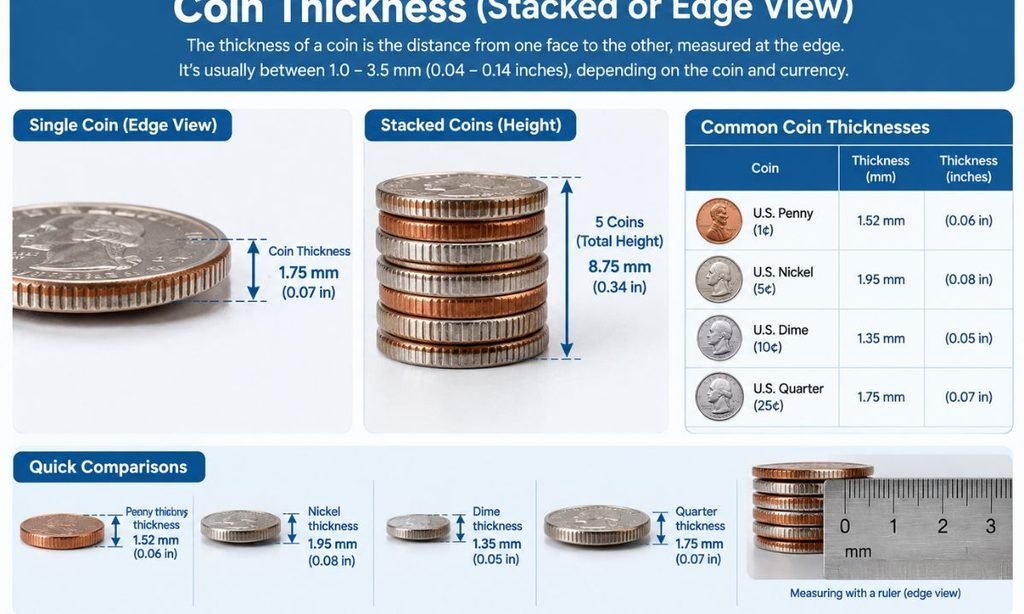
8. Coin Thickness (Stacked or Edge View)
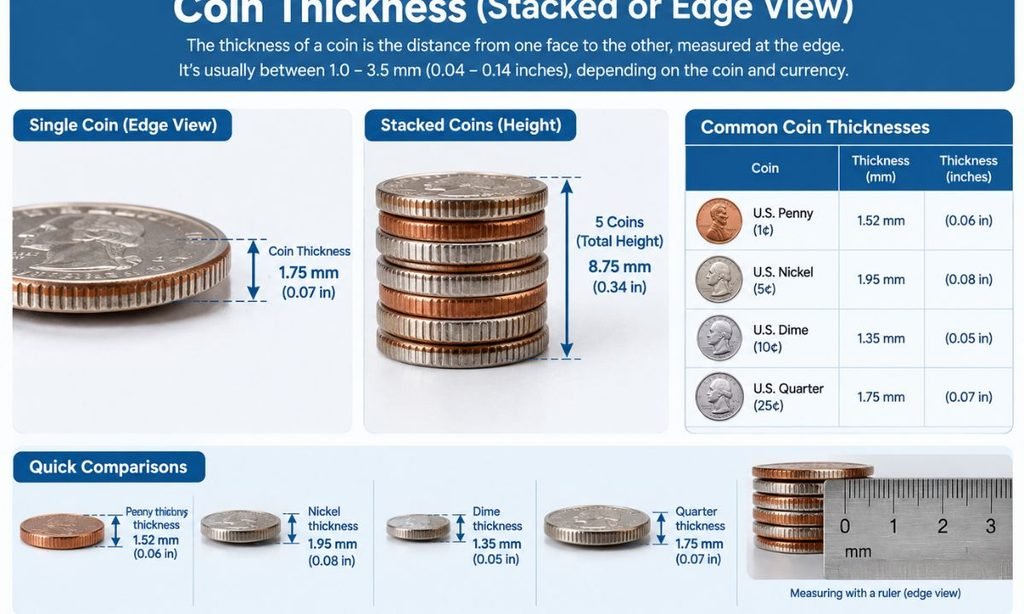
While a single coin is much thinner than 1 cm, stacking about five standard coins together creates a stack roughly 1 cm tall, giving a hands-on way to build the measurement.
9. House Key Thickness
A single house key is thinner than 1 cm on its own, but a small bundle of two to three keys held together approximates 1 cm in combined thickness.
10. Lip Balm Stick Diameter
The circular width of a standard lip balm tube is close to 1 cm, making it a handy reference for anyone who carries one in a bag or pocket.
11. Charging Cable Thickness (Bundled)
A single charging cable is thinner than 1 cm, but two cables bundled together typically reach close to the 1 cm mark, useful for anyone organizing cords.
12. Jewelry Bead Size
Medium-sized beads used in bracelets and necklaces are frequently manufactured at exactly 1 cm in diameter, making jewelry supplies a genuinely precise reference.
13. Toothpaste Tube Opening
The circular opening at the tip of a standard toothpaste tube measures approximately 1 cm across, a detail most people have never consciously measured.
14. Dice Dot Size
While a full standard die is larger, the diameter of the dots (pips) on a large die can approach 1 cm, particularly on oversized or novelty dice.
15. Paper Clip Width
The width of a standard paper clip, measured across its rounded top, is very close to 1 cm, making it another reliable desk-based comparison.
1 cm in Daily Life: Practical Applications
Beyond simple visualization, 1 cm plays a functional role across many everyday tasks. In sewing, seam allowances are frequently measured in single centimeters. In cooking, ingredient sizes like a “1 cm cube of butter” or “1 cm slice of ginger” are common in recipes worldwide. In home improvement, wall anchors, screws, and small hardware components are often just about 1 cm long.
Even in personal care, many grooming tools and packaging components are designed around 1 cm dimensions because it represents a practical, manageable scale for small, precise objects.
How to Visualize 1 cm Without a Ruler
When a ruler isn’t available, comparing an object to something you already know is the fastest way to estimate 1 cm accurately.
| Reference Object | Approximate Size | How It Helps |
| Fingernail width | 1 cm | Always available for quick comparison |
| Standard staple | 1 cm | Offers a nearly exact visual match |
| Pencil thickness | 0.7–1 cm | Common object found in most homes |
| Stack of 5 coins | ~1 cm | Builds the measurement physically |
These comparisons are approximate rather than laboratory-precise, but they’re accurate enough for everyday estimation tasks like judging whether an item will fit a space or matching a rough measurement.
Common Mistakes When Estimating 1 cm
Even with helpful references, people often misjudge 1 cm in predictable ways. A few common errors include:
- Confusing 1 cm with 1 inch since inches are more familiar to some readers, they overestimate 1 cm as being nearly twice its actual size.
- Underestimating stacked measurements assuming five coins equal exactly 1 cm without accounting for slight variations between coin types.
- Relying on memory instead of objects visual memory of small measurements fades quickly, leading to inaccurate guesses.
- Ignoring object variation not all pencils, buttons, or keys are manufactured to identical dimensions, so estimates should always be treated as approximate.
Being aware of these tendencies helps improve estimation accuracy over time.
1 cm Compared to Other Measurements (mm, Inch, cm Chart)
Seeing 1 cm next to smaller and larger measurements makes its scale easier to understand.
| Measurement | Approximate Value | Difference |
| 1 mm | 0.1 cm | 10x smaller than 1 cm |
| 1 cm | 1 cm | Reference point |
| 1 inch | 2.54 cm | Roughly 2.5x larger than 1 cm |
This comparison highlights why 1 cm sits in a useful middle ground: large enough to measure small objects with precision, yet small enough to require careful, deliberate estimation.
How 1 cm Is Used in Product Design and Manufacturing
In product design, 1 cm is a common tolerance and sizing unit for small components buttons, connectors, fasteners, packaging seams, and decorative details are frequently designed around this measurement because it balances visibility with compactness. Manufacturers rely on centimeter-based specifications because they’re precise enough to ensure components fit correctly, yet simple enough to standardize across production lines.
Electronics, jewelry, stationery, and personal care products all commonly feature parts measured in single centimeters, reinforcing why 1 cm remains such a practical, widely referenced unit in everyday design.
Best Tools to Measure 1 cm Accurately
While everyday comparisons are useful for quick estimates, certain tools provide far greater precision when exact measurements matter.
- Standard ruler or tape measure the most reliable and widely available option for measuring 1 cm accurately.
- Digital calipers ideal for small, precise objects like beads, screws, or electronic components.
- Sewing tape measure flexible and useful for curved or soft materials.
- Printable centimeter ruler a convenient backup when a physical ruler isn’t on hand.
For everyday household tasks, a basic ruler is usually sufficient, but calipers offer far more precision for detailed work like jewelry-making or electronics repair.
Importance of Accurate Measurement in Everyday Tasks
Accurate measurement, even at the small scale of 1 cm, prevents wasted materials, ill-fitting products, and repeated adjustments. Whether you’re cutting fabric, assembling furniture, or checking whether an item will fit a shelf, precision at the centimeter level often determines whether a task succeeds on the first attempt.
Developing a reliable mental sense of 1 cm reinforced by the everyday comparisons above — makes these small but frequent measurement decisions faster and more accurate.
Frequently Asked Questions
What Is 1 cm in Inches?
1 cm is equal to approximately 0.3937 inches, or just under half an inch.
Is 1 cm Big or Small?
1 cm is considered a small measurement roughly the width of a fingernail though it’s large enough to measure many small everyday objects precisely.
How Can I Measure 1 cm Without a Ruler?
You can estimate 1 cm using familiar objects like a fingernail, a standard staple, or a pencil’s thickness as a visual reference.
Is 1 cm Common in Daily Life?
Yes, 1 cm is used constantly in daily life, from clothing measurements and recipes to product packaging and craft projects.
What Objects Are About 1 cm in Size?
Common examples include a fingernail width, a pencil’s thickness, a shirt button, a USB port height, and a standard paper clip’s width.
Conclusion
Understanding 1 cm doesn’t require complicated tools or technical training it simply takes a few reliable, everyday comparisons. From a fingernail’s width to a pencil’s thickness to a standard paper clip, these 15 familiar objects make it easy to visualize exactly how big 1 cm really is, along with its conversions, common measurement mistakes, and practical daily applications.
The easiest way to remember 1 cm going forward is to anchor it to something you already carry with you: your own fingernail. With that single reference point, along with the comparisons and tables in this guide, estimating 1 cm accurately becomes second nature even without a ruler in hand.
